FOFN Guides
Guide to Fuel Level Monitoring for Vehicles in Vietnam: How Can Delivery Trucks, Construction Vehicles, and Interprovincial Transport Keep Track of Diesel Expenses?
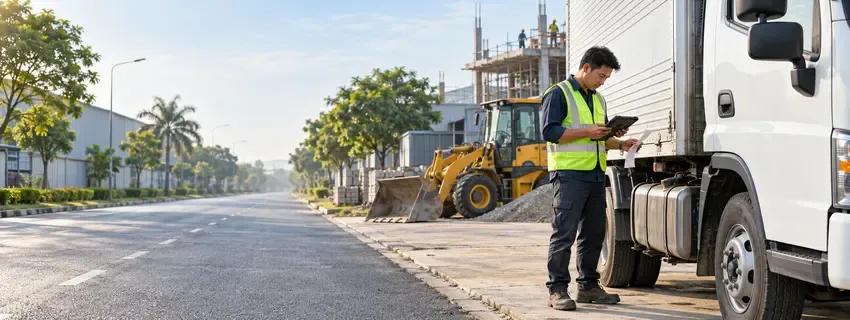
In Vietnam, urban delivery, factory transportation, construction vehicles, and interprovincial freight all involve high vehicle usage and frequent refueling. Effective fuel monitoring goes beyond simply tracking a vehicle’s location; it also involves consolidating refueling, fuel consumption, parking, and abnormal fuel loss data into a single record for analysis. This guide is intended for fleets, construction contractors, and equipment rental companies planning to deploy GPS fuel monitoring systems in Vietnam.
When implementing fuel monitoring in Vietnam, what is the most important issue to address first?
The answer is simple:Match “how much fuel was added” with “how much fuel this vehicle actually used.”
Many delivery and construction vehicles don’t travel very far each day, but they refuel frequently. At the end of the month, when managers receive a stack of fuel receipts, they still encounter these issues:
- The driver said he refueled, but there is no record of the fuel level before and after refueling;
- When a vehicle is parked at a factory, warehouse, or on the side of the road, there are abnormal changes in fuel levels;
- On the same delivery route, some vehicles consistently have higher-than-average fuel consumption;
- Engineering equipment is billed by labor hours, but diesel consumption cannot be clearly accounted for;
- The company has its own GPS platform, but it cannot see the actual changes in the fuel tank.
Therefore, for the Vietnam project’s fuel management, we recommend not focusing solely on “vehicle location.” To make the data useful, you should analyze fuel consumption trends, refueling events, parking locations, mileage, and working hours together.
Which scenarios in Vietnam should be addressed first?
1. Urban Delivery and Factory Transportation
Vehicles used in the food, beverage, spare parts, building materials, and e-commerce delivery industries typically make multiple trips per day and frequently enter and exit warehouses.
These types of vehicles are best suited for:
- Total daily fuel volume;
- Fuel consumption per 100 kilometers;
- Changes in fuel levels at warehouses, customer locations, and parking areas;
- Prolonged idling;
- Is there any abnormal fuel loss during non-working hours?
Managers do not need to stare at the screen all day. By reviewing the daily list of anomalies—such as refueling, fuel loss, idling, and vehicles with high fuel consumption—they can quickly identify the most critical issues.
2. Construction Machinery and Vehicles
Excavators, loaders, dump trucks, road rollers, and generators often operate continuously on the same construction site. The challenge lies not in mileage, but in whether operating hours and fuel consumption are reasonable.
Recommended focus areas:
- Approximately how much diesel is consumed per hour of operation?;
- Are there any unusual changes in the fuel tank after the equipment is shut down?
- Incoming, outgoing, and remaining inventory for temporary fuel tanks;
- Fuel levels before and after the equipment is moved to a new job site;
- Are there noticeable differences in fuel consumption among devices of the same model?
This way, project managers do not have to rely entirely on manual meter readings when calculating shift costs.
3. Interprovincial Freight and Fixed Routes
Vehicles traveling across provincial borders cover longer distances and experience greater variations in refueling locations, rest stops, and driving habits along the way.
For projects of this type, it is recommended to prioritize the following three tasks:
- Verify the time, location, and changes in fuel volume;
- Check whether abnormal fuel loss occurs during parking or non-working hours;
- Compare fuel consumption among vehicles with similar routes and similar payloads.
High fuel consumption isn’t necessarily the driver’s fault; it may also be related to traffic congestion, road conditions, load, air conditioning, idling, or the vehicle’s condition. The system’s role is to first identify anomalies and then provide managers with evidence to verify them.
How should we choose the data upload method for the Vietnam project?
Cities and Major Routes: Real-time Online
For delivery vehicles, shuttle buses, and factory transport vehicles, if routes are consistent and managers wish to receive timely alerts, real-time online tracking can be used.
The platform allows users to view fuel levels, locations, routes, refueling events, and abnormal fuel loss incidents. When a problem occurs, managers can quickly determine where the vehicle was at the time.
Occasional entry into areas with weak network coverage: Save data offline, then resume and resend upon reconnection
Some vehicles typically operate in cities or industrial areas, but occasionally travel to remote construction sites, mountain roads, or areas with weak network coverage.
In this case, we recommend selecting devices with local storage capabilities: record data first when an upload is temporarily unavailable, and upload it later once network connectivity is restored.
Note: Specific data retention periods, upload frequencies, and actual performance will be determined by on-site testing of the pilot vehicles.
Devices without long-term internet access: Periodic Bluetooth data retrieval
For remote construction sites, temporary diesel pumps, or devices that lack a stable cellular network for extended periods, consider using local storage combined with mobile Bluetooth reading.
This approach does not aim for real-time monitoring every minute, but rather ensures that records of refueling, fuel level changes, and fuel consumption are retained. On-site supervisors can periodically go to the equipment to export the data, thereby enabling review and reconciliation.
We will first conduct a pilot program in Vietnam; here is the recommended plan:
Do not install the system on the entire fleet right from the start. Instead, we recommend selecting four representative vehicles:
- One urban delivery vehicle;
- A long-haul truck;
- A piece of construction equipment or a dump truck;
- A project oil tank or fixed storage site.
During the pilot phase, cross-check the platform data against actual fuel receipts, driver reports, and device operating hour records. After two to four weeks of operation, managers will typically be able to determine:
- Are the equipment installation and fuel tank calibration accurate?;
- Does the on-site network meet the requirements?;
- Which reminders are most valuable?
- Which vehicles and fuel tanks should be prioritized for installation?
What preparations are needed before procuring for the Vietnam fuel monitoring project?
Please have the following information ready before requesting a quote to ensure a more accurate proposal:
- How many vehicles, pieces of machinery, and fuel tanks are there, respectively?
- Photos of the fuel tank, its depth, shape, and installation location;
- Do the vehicles primarily operate in cities, at factories, on construction sites, or on interprovincial routes?
- Do you already have a GPS platform, or do you need API/protocol integration?
- Are user guides for the backend required in Vietnamese, English, or Chinese?
- Do you need real-time alerts, or do you only want to view daily and monthly reports?
- What concerns you most: fuel theft, falsified refueling records, high fuel consumption, or unclear inventory?;
- Are there local installation technicians available, and how should remote installation guidance be provided?
Making these details clear upfront makes it easier to get a suitable solution than simply asking, “How much does the equipment cost?”
Frequently Asked Questions (FAQ) on Fuel Monitoring in Vietnam
Can fuel level sensors be installed on trucks and construction machinery in Vietnam?
Most diesel trucks, construction machinery, and generators are suitable for installation. However, since fuel tanks vary in depth, structure, material, and available installation space, photos and dimensions must be confirmed beforehand.
Is it necessary to install fuel monitoring systems on urban delivery vehicles?
This is typically necessary when there are a large number of vehicles, frequent refueling, and frequent driver rotations. The focus of management is not on monitoring the vehicles themselves, but on ensuring that refueling records, fuel consumption, and routes can be verified.
If the platform indicates a drop in fuel levels, can this be taken as definitive proof of fuel theft?
This cannot be determined outright. Variations may result from a tilted fuel tank, parking on a slope, missed refueling, draining during maintenance, or uncalibrated sensors. A judgment should be made by considering the fuel level curve, vehicle location, parking duration, and manual records.
Can data still be saved at remote construction sites in Vietnam where the internet connection is unstable?
Depending on the project, you can choose to save data offline and upload it later, or use Bluetooth to read data stored locally. The specific method depends on how often on-site personnel can access the device.
We already have our own GPS platform. Can we still integrate fuel level data with it?
Sure. Before the project begins, confirm the device protocols, data formats, and interface requirements, and then evaluate whether to integrate directly with the client’s platform or server.
Conclusion: For the Vietnam project, start by linking “refueling—fuel consumption—route.”
In Vietnam’s logistics, engineering, and freight sectors, it is best to start pilot programs with vehicles that use fuel frequently. Don’t aim for as many features as possible right from the start; it’s enough to clarify a few key points first:
- How much fuel was actually added to the car;
- Where is most of the fuel consumed?;
- When and where did the abnormal fuel loss occur?;
- Can the operating hours and fuel consumption of the construction equipment be reconciled?
Once these data points are consistently aligned, the system can be expanded to include more vehicles, machinery, and fuel tanks—only then will fuel level monitoring truly become a daily management tool.