FOFN Solutions
Fuel Monitoring Solutions for Sanitation and Municipal Vehicles: You can verify whether routes were driven, tasks were completed, and how much fuel was used.
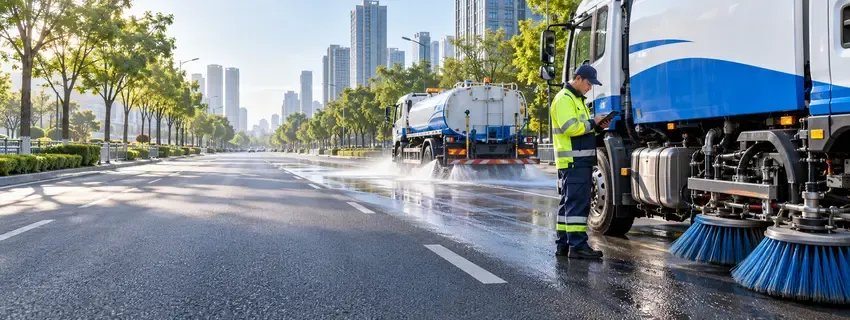
A vehicle fuel monitoring solution designed for sanitation departments, municipal companies, and sanitation outsourcing firms. By analyzing data on fuel tank levels, GPS tracks, operational areas, and nighttime anomalies, the solution helps verify the workload and fuel consumption associated with tasks such as street watering, street sweeping, and waste collection, providing a reference for budget reviews and project settlements.
Fuel Monitoring Solutions for Sanitation and Municipal Vehicles: You can verify whether routes were driven, tasks were completed, and how much fuel was used.
Fuel management for sanitation and municipal vehicles may not seem as complex as it is for long-haul transportation, but it is actually quite challenging to manage.
Water trucks, street sweepers, and garbage trucks typically operate in relatively fixed routes each day, but fuel consumption varies significantly depending on the season, weather conditions, and specific tasks. Routine road watering and landscaping maintenance differ significantly in operational intensity from winter de-icing, emergency debris removal during heavy rains, and nighttime garbage collection. If one looks only at the total amount of fuel refilled at the end of the month, it is difficult to determine whether a vehicle’s fuel was actually used for normal operations.
Particularly when it comes to fiscal budgeting, government procurement, or settlement of environmental sanitation outsourcing contracts, management needs to know not only “how much fuel was used,” but also requires a complete data chain: whether the vehicle arrived at the work area, how long it was in operation, whether the route met requirements, and whether fuel level changes were normal.
FOFN’s fuel monitoring solution for sanitation and municipal vehicles integrates fuel level sensors, GPS positioning, electronic geofencing for operational areas, and a management platform to help sanitation departments, municipal companies, and outsourcing service providers view fuel consumption, routes, and operational records in one place.
Applicable Scenarios
This solution is applicable to:
- Water Sprinkler Trucks, Dust Suppression Spray Trucks
- Road Sweepers, Wash-and-Sweep Trucks
- Garbage collection trucks, compactor trucks
- Landscape Maintenance Vehicles
- Municipal Road Maintenance Vehicles
- Winter de-icing, snow-melting, and spreading vehicles
- Emergency Drainage, Disaster Relief, and Rescue Support Vehicles
- Waste Management Outsourcing Companies and Municipal Service Companies
What are the main challenges regarding fuel consumption in sanitation vehicles?
The route is fixed, but the workload is not fixed.
Fuel consumption varies along the same road depending on whether routine water sprinkling is performed in the summer or de-icing is carried out in the winter; fuel consumption for garbage trucks also varies significantly depending on whether they are empty, fully loaded, or subject to frequent starts and stops. Evaluating fuel consumption based solely on mileage is often insufficiently accurate.
Relying on manual spot checks alone is not comprehensive enough to determine whether the work has been fully covered.
A vehicle may have traveled along a certain route, but that does not necessarily mean it has completed sweeping, watering, or trash collection. Managers need to make judgments by considering vehicle trajectories, dwell times, operating periods, and fuel consumption trends collectively, rather than relying solely on a single location point.
During non-operational hours at night, fuel requires even greater attention.
Many sanitation vehicles are parked overnight in parking lots, repair shops, or transfer stations. If there is a noticeable drop in fuel levels while the vehicle is turned off and not in operation, it is necessary to promptly verify whether there has been unauthorized use, fuel siphoning, fuel transfer, or an omission in record-keeping.
Budget reviews and outsourcing settlements require data support.
For municipal projects or outsourced service projects, which involve a large number of vehicles and long durations, it is difficult to establish complete, continuous, and traceable records relying solely on fuel receipts, driving logs, and manual ledgers.
What parts make up the proposal?
1. Fuel Tank Level Monitoring
Install fuel level sensors on the fuel tanks of equipment such as water sprinkler trucks, street sweepers, and garbage trucks to continuously record changes in fuel levels.
The platform allows you to view:
- Current Fuel Level
- Daily and Per-Shift Fuel Consumption
- Refueling Time and Fuel Volume
- Abnormal Fuel Level Decrease
- Low Fuel Level Alert
- Changes in Fuel Level While the Vehicle Is Parked
After tank calibration, changes in liquid level can be converted into more intuitive fuel volume data for daily fuel consumption management and refueling verification.
2. GPS Positioning and Operation Trajectories
GPS devices record vehicle locations, routes, dwell times, and operational status. Managers can compare vehicle tracks with designated service areas to verify whether vehicles have entered the corresponding roads, blocks, neighborhoods, or waste collection points as scheduled.
For example, if a sweeper is assigned to a specific area, the platform can track its operating time within that area, the routes it has covered, and whether its fuel consumption for the day generally matches the intensity of its operations.
3. Electronic Fence for Work Areas
Different types of geofences can be defined on the platform, such as:
- Daily Cleaning Areas
- Water Sprinkling Routes
- Garbage Collection Station
- Waste Transfer Station
- Parking Lot
- Service Centers
- Gas Station
- No-Entry Zone
The platform records every time a vehicle enters, leaves, or remains in a specific area for an extended period. This helps managers determine whether vehicles have arrived at their assigned locations as per their assignments, whether they are operating along the designated routes, and where changes in fuel consumption occur.
4. Nighttime Abnormal Fuel Volume Monitoring
When sanitation vehicles are parked at night, during shift changes, or outside of operating hours, if there is a significant drop in fuel levels, the system can flag this event based on the configured threshold.
Managers can view the following simultaneously:
- Time of Fuel Level Decrease
- Was the vehicle turned off at that time?
- Specific vehicle parking location
- Whether in a parking lot, repair shop, or gas station
- Are there any records of normal refueling, maintenance, or dispatching before and after this incident?
While this type of data cannot replace on-site investigations, it can help managers more quickly identify vehicles and time periods that require verification.
How can fuel consumption be used to estimate workload?
Fuel consumption for sanitation vehicles cannot be simply determined by “how many kilometers were driven.”
A water truck spraying water at low speeds and frequently starting and stopping; a street sweeper operating its cleaning equipment; and a garbage truck making multiple stops to load, unload, and compact trash—each has a different fuel consumption pattern. Therefore, a more reasonable approach is to analyze fuel consumption in conjunction with operating time, operating area, and route coverage.
For example:
- The vehicle operated continuously for 6 hours within the designated operating area, and fuel consumption remained within the historical normal range;
- The vehicle has a travel history, but it only makes brief stops at the edges of the area, yet its fuel consumption is significantly higher than expected;
- Vehicles remain parked in non-operational areas for extended periods, and fuel levels drop abnormally overnight;
- Vehicles of the same type perform similar tasks, but one of them has consistently had higher-than-average fuel consumption.
These situations warrant further verification. Over time, management can establish more reasonable fuel consumption benchmarks for different vehicle models and types of operations.
How Can Data Be Used for Settlement in Environmental Sanitation Outsourcing?
For outsourced service projects, fuel consumption data is not used solely to “catch drivers in the act,” but rather to provide a more reliable basis for settlement.
The platform can generate the following records:
- Vehicle On-Duty Time
- Time of arrival at the work site
- Operational Trajectory Within the Work Area
- Duration of the assignment
- Daily Fuel Consumption
- Fueling Records
- Abnormal events during nighttime or non-operational hours
- Route Coverage
Combined with the contractually agreed-upon road length, service area, waste collection volume, vehicle shifts, or service duration, this data can serve as supplementary evidence for billing, performance evaluations, and service quality spot checks.
The final settlement rules shall still be subject to the contract, on-site acceptance, and local regulatory requirements; the purpose of fuel level and trajectory data is to make the verification process clearer and more efficient.
Value of the Solution
Consider both workload and fuel consumption together
Managers no longer just look at how much fuel a vehicle has refueled today; instead, they can see in which areas the vehicle has been operating, how long it has been working, and whether its fuel consumption aligns with the task.
Reduce unauthorized fuel use and abnormal fuel loss
When a vehicle experiences a significant drop in fuel levels while in a parking lot, at a repair shop, or during non-operational hours, the system can issue a timely alert, allowing managers to investigate.
Providing a data link for fiscal budgeting and auditing
Refueling, fuel consumption, routes, operating times, and coverage areas can be recorded continuously. This provides more comprehensive data for municipal budget audits, project acceptance inspections, and outsourcing settlements.
Improve Dispatch Efficiency
By monitoring each vehicle’s remaining fuel level and location, dispatchers can schedule refueling, maintenance, or vehicle swaps in advance, preventing tasks from being disrupted by low fuel levels while vehicles are in operation.
Reduce the burden of manual meter reading and spot checks
There is no need to manually read fuel gauges or verify routes for each vehicle every day. Managers can prioritize addressing low fuel levels, abnormal fuel consumption, uncovered areas, and nighttime anomalies.
Recommended Deployment Methods
For projects being implemented for the first time, it is recommended to start with a pilot program using a representative fleet, such as:
- 2 water trucks
- 2 road sweepers
- 1 garbage truck
- 1 parking lot and 1 gas station geofence
- 2–3 key service routes
First, complete fuel tank calibration, define operational zones, set up nighttime alert rules, and verify daily reports. After the system has been running for a period of time, adjust the fuel consumption reference ranges based on different vehicle models and seasons, and finally roll out the system to the entire fleet.
Frequently Asked Questions
Can the same fuel monitoring solution be used for both water trucks and street sweepers?
While the same management approach can be applied, fuel tank capacities, operating methods, and fuel consumption patterns vary by vehicle model. We recommend setting separate low-fuel thresholds, abnormal fuel consumption reference ranges, and operational area rules for each model.
How can you determine whether a vehicle has completed its route?
The platform can compare historical GPS tracks with preset work areas and road routes, and make determinations based on the vehicle’s operating time and dwell time within those areas. Whether the task has been completed should ultimately be confirmed by referring to specific operational standards and conducting on-site spot checks.
Does a drop in fuel levels overnight necessarily mean fuel theft?
Not necessarily. It could also be due to maintenance, normal fuel transfers, missing refueling records, sensor fluctuations, or changes in the vehicle’s parking angle. The system’s purpose is to filter out abnormal events and help managers quickly verify the cause.
Can it be used for winter de-icing and emergency vehicles?
Yes. The operating hours, routes, and fuel consumption of vehicles used for winter de-icing, snow removal, emergency drainage, and disaster relief operations typically fluctuate significantly. Combining fuel consumption data with location data allows for more accurate documentation of mission processes, providing valuable references for scheduling and post-mission analysis.
Can fuel consumption data be used as the basis for outsourcing settlements?
This information may serve as supplementary evidence. When combined with the duration of the assignment, route coverage, shifts, service area, and contractual requirements, it can provide greater clarity during settlement verification. However, the final settlement shall be determined in accordance with the terms of the contract, on-site acceptance, and the company’s management policies.
What should I do if there’s no internet connection in the parking lot?
The appropriate communication method can be selected based on local network coverage. If the network becomes temporarily unstable, the device can temporarily store some data and transmit it once the network is restored. Specific capabilities must be confirmed based on the device model and on-site network conditions.