FOFN Guides
Guide to Fuel Level Monitoring for Vehicles in the Philippines: How to Manage Diesel for Fleets, Construction Vehicles, and Remote Routes
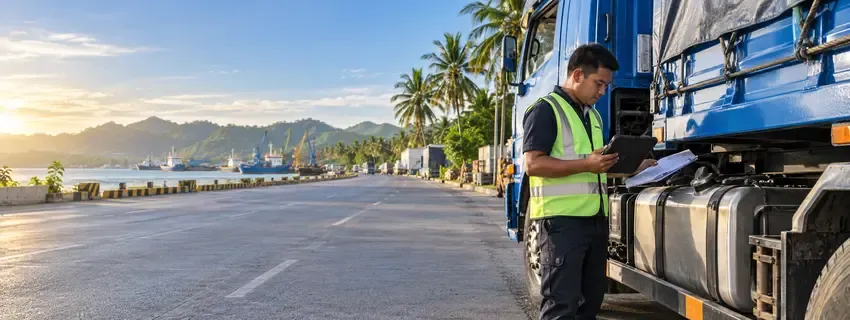
When managing diesel fuel for vehicles and equipment in the Philippines, it is not enough to simply consider where the equipment is installed; one must also take into account the routes vehicles take, the stability of the network at project sites, and whether there is transportation to islands or remote construction sites. This article explains how to select the most appropriate fuel management approach for fleets, construction vehicles, and mobile fuel tanks in the Philippines under various network conditions.
Guide to Fuel Level Monitoring for Vehicles in the Philippines: How to Manage Diesel for Fleets, Construction Vehicles, and Remote Routes
The Philippines can implement fuel monitoring, but it cannot use “a one-size-fits-all approach” for all projects.
Urban delivery vehicles, long-haul trucks, construction machinery, mining equipment, and backup generators all operate under different real-world conditions. Some vehicles operate primarily in cities and on major roads, making them suitable for online management; other equipment is used in mountainous areas, on island projects, or at temporary construction sites, where network conditions may be unstable. For these, it is more appropriate to first store fuel level data on-site and then collect and review it according to a schedule.
For customers in the Philippines, clarifying the following three questions is more important than selecting a product right away:
- In which regions do the vehicles and equipment primarily operate?;
- Should fuel level data be viewed in real time, or is periodic verification sufficient?
- Is the management focus on preventing abnormal fuel loss, verifying refueling, or calculating fuel consumption costs?
Once these three points are clearly established, the subsequent steps—including equipment selection, SIM cards, the platform, and on-site management processes—will proceed smoothly without any detours.
Common Diesel Management Scenarios in the Philippines Project
Vehicle and equipment applications in the Philippines are relatively fragmented, with common needs typically falling into the following categories.
Logistics and Delivery Fleet
Trucks, delivery vehicles, and refrigerated trucks often need to operate across cities and regions. Fleet managers are typically most concerned about:
- Does the fuel level increase reasonably after refueling?;
- Is fuel consumption abnormal while the vehicle is in transit?;
- Are there any fuel level changes that require explanation during extended periods of parking?
- Can the route, idle time, and fuel consumption be roughly correlated?
For projects like this, it’s generally more effective to view fuel levels, location, driving status, and refueling records together. The focus isn’t on tracking every liter of fuel, but on identifying vehicles that deviate from normal patterns over the long term.
Construction Machinery and Construction Projects
Excavators, loaders, road rollers, and generators may be relocated from site to site as projects progress. Some construction sites are located far from urban areas, so network conditions cannot be assumed in advance.
The key focus areas in engineering project management are typically:
- How long has a device been in operation this month?;
- How much diesel was added;
- Are there any noticeable changes in fuel levels during downtime or at night?
- Can the oil in the mobile storage tanks be matched with the oil used in the equipment?
The biggest headache for construction projects is ending the month with a pile of fuel receipts but being unable to account for how much fuel each piece of equipment used. By consolidating equipment, labor hours, fueling, and fuel level changes into a single record, management becomes much easier.
Remote areas, island projects, and areas with weak network coverage
Not all projects require real-time online connectivity.
If vehicles or equipment frequently enter areas with unstable network connectivity, on-site management should be configured in advance to use a “log-first” mode: upload data normally when a network is available; when the signal is weak, save the data first and upload it later once the network is restored; for fixed locations without a stable network, collect data at the equipment according to the inspection schedule.
The core of this approach is not real-time alerts, but ensuring that the information can be retrieved later:
- When to refuel;
- What time periods are considered normal consumption?;
- During what period did the changes requiring explanation occur?
- Can the diesel records for the past month be reconciled?
When implementing fuel management in the Philippines, don’t rush to promise results from the online platform.
The most common mistake in fleet management projects is assuming that all routes are the same based solely on urban network conditions.
In reality, vehicle routes, parking locations, mountainous terrain, project areas, and local carrier conditions can all affect actual data transmission. Even within the same country or city, network performance may vary across different parking lots, warehouses, construction sites, and roads.
Therefore, the safest approach is:
- First, list the areas where vehicles frequently travel and key parking locations;
- Select representative vehicles or equipment for testing;
- Verify network connectivity, data reporting, and platform display using actual operating routes;
- Then decide on the method for large-scale deployment.
Mobile network coverage at the project site can be verified prior to implementation by referring to information from local carriers and the Philippine NTC’s public coverage data. Do not assume that a remote project site will have stable connectivity based solely on a single carrier’s performance in urban areas.
Three Common Management Methods for Fleet Operations in the Philippines
Option 1: Online Fuel Level and Vehicle Operation Management
Suitable for trucks, delivery vehicles, and service vehicles operating primarily in areas with relatively stable network conditions.
Managers can use fuel levels, routes, parking times, and refueling records to conduct daily scheduling and review anomalies. This solution is ideal for projects that require a quick response, involve a large number of vehicles, and where managers wish to view data centrally.
Method 2: Data Upload in Weak Signal Areas and Regular Review
Suitable for vehicles that are online most of the time but occasionally enter areas with unstable signal coverage.
Projects of this type do not require data to be available every minute. What is more important is that the devices retain records during periods without a signal and fill in the gaps once network connectivity is restored; managers review changes in refueling, consumption, and parking periods on a weekly or monthly basis.
Method 3: Offline Logging and On-Site Data Collection
Ideal for remote construction sites, fixed construction sites, areas surrounding mining sites, or regions without stable cellular coverage.
This method cannot replace real-time remote management, but it eliminates the need to rely entirely on manual, verbal records of diesel fuel levels. Field personnel visit the equipment at fixed intervals, use their cell phones to read the recorded fuel level changes, and then cross-check the data against refueling slips and timesheets.
It is more prudent to start with a small-scale pilot program rather than deploying a large number of devices all at once.
For the Philippines project, if vehicle routes are complex, we recommend conducting a pilot program with a small number of representative vehicles first.
For example, options include:
- A city delivery van;
- A long-haul truck;
- A piece of construction equipment or a generator;
- A vehicle that frequently travels on routes with weak cellular coverage.
The pilot period should cover normal operations, one refueling, and one extended parking period. The focus should not be on whether the pages look attractive, but rather on the following points:
- Have the fuel tank readings been actually calibrated?;
- Can the refueling events be reconciled with the on-site records?;
- Does normal fuel consumption align with the vehicle’s mission?;
- Can key records be retained and completed when the network signal is weak?;
- Will managers be able to understand and use this data?
Once the pilot is successfully implemented, proceed with mass deployment; this will significantly reduce the cost of making changes later on.
We recommend that Philippine customers review this list before making a purchase.
Why is it important to verify this information?
Vehicle Type, Number of Fuel Tanks, and Fuel Tank Shape
Impact on Fuel Level Calibration and Actual Management Practices
Frequently traveled cities, roads, islands, or project areas
Impact on Network Testing and Data Strategy
Are there any remote construction sites or parking locations with weak network coverage?
Determine whether local logging and periodic data collection are required
Key Management Objectives
The focus differs for preventing abnormal fuel loss, verifying refueling, and calculating fuel consumption
Whether to use a proprietary platform
Confirm protocols, interfaces, and data integration methods in advance.
Who is responsible for on-site refueling and inspections?
Establishing Ledger and Exception Review Processes
Required front-end languages
Designed for practical use by drivers, dispatchers, and managers
For the Philippines project, which data should be reviewed first?
When you first start managing this, it’s not recommended to make the reports too complicated. It’s enough to focus on the following five items for now:
- Do the refueling times, refueling volumes, and increases in fuel levels generally correspond?
- Fuel consumption trends during normal vehicle operation;
- Significant changes during extended parking periods, at night, or outside of operating hours;
- Differences in fuel consumption among similar vehicles on comparable routes;
- Has data from remote or areas with weak network coverage been filled in as planned?
After two or three months of continuous operation, a fleet typically establishes its own normal range. At that point, it is most efficient to focus on vehicles and items that deviate from the norm.
Frequently Asked Questions
Can fuel monitoring be implemented for vehicles in the Philippines?
Yes. Fuel management can be implemented for trucks, construction machinery, generators, and mobile fuel tanks based on actual operating conditions. The key is to first confirm the fuel tank specifications, vehicle routes, network conditions, and management objectives.
Is it possible to manage diesel in remote areas of the Philippines where there is no stable internet connection?
Yes, but you should not expect stable, real-time remote monitoring. In remote areas, it is more appropriate to use local logging, periodic data collection via mobile devices, and monthly reviews, with the primary focus on ensuring that refueling, consumption, and unusual changes are properly documented.
Which carrier’s SIM card should I choose in the Philippines?
No single carrier is suitable for all projects. Actual testing should be conducted based on the areas where vehicles frequently travel, as well as warehouses, construction sites, and parking locations, before determining the SIM cards and data plans. Before a large-scale deployment, it is recommended to conduct a pilot test on a representative route.
Can fuel level data directly prove that a driver is stealing fuel?
No. An abnormal fuel level merely indicates that verification is needed for a specific period; it must also be evaluated in conjunction with parking locations, refueling records, maintenance, fuel transfers, and on-site operations.
Can customers in the Philippines integrate this with their own platforms?
Protocols, data formats, interface methods, and testing requirements can be confirmed before the project begins. Whether direct integration is possible and what adaptation work is required should be determined based on the specific technical specifications of the equipment and platform.