FOFN Guides
Fuel Monitoring Guide for Mali: How to Manage Remote Mining Sites, Transport Vehicles, and Diesel Reserves in Areas with Poor Network Coverage?
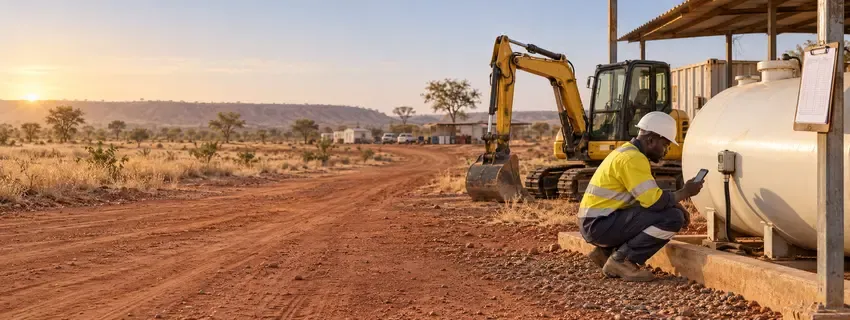
Mining sites, rural construction sites, long-haul transport routes, and temporary camps in Mali are often located in remote areas with unstable internet connections and limited on-site personnel. Fuel monitoring cannot rely solely on real-time maps; it must also ensure that refueling, fuel spills, inventory levels, and equipment fuel consumption are still recorded during periods of no internet connection. This guide explains how the Mali project selected real-time online monitoring, offline data upload with offline data transmission, and Bluetooth offline data collection, and established inspection and reconciliation processes that are truly actionable.
Can the Mali project implement fuel level monitoring?
Sure, but the project goals should be set a bit more realistically.
If a customer wants to view all vehicles in real time via the backend from any location and at any time, remote projects may not fully meet this need.
The objectives that are more suitable for the Mali project are:
- Upload promptly when an internet connection is available;
- Continue saving even when offline;
- Restore the data once the network is back online;
- During extended periods without internet access, field personnel can periodically retrieve the data;
- Every refueling, inventory change, and unusual fuel loss is documented.
The resulting system isn’t just effective in areas with strong signal reception; it also helps managers reconcile records even in complex field environments.
Which projects in Mali most urgently need fuel management systems implemented first?
1. Remote mining areas and mining equipment
Excavators, loaders, dump trucks, drilling rigs, diesel pumps, and generators in mining areas typically have high fuel consumption, are widely dispersed, and may not have management personnel on-site every day.
The most common questions are:
- After the fuel tanks are delivered to the site, the remaining inventory is estimated manually;
- The equipment is shut down at night, and the next day the fuel level is lower, but it is unclear when this occurred;
- Machinery operates for long hours every day, but fuel consumption can only be estimated based on experience;
- There are multiple workfaces in the same mining area, and it is unclear which piece of equipment the fuel is being distributed to;
- When the on-site network is poor and data cannot be viewed in the backend, it is impossible to determine whether records are truly missing.
The focus of this type of project is not on tracking the location every minute, but rather on recording and preserving data on fuel tank inventory, equipment refueling, labor hours, and changes in fuel levels.
2. Remote Construction Sites and Temporary Camps
Road construction, water conservancy projects, campsite construction, and temporary production sites often require the use of privately owned diesel generators, transport vehicles, and small fuel storage tanks.
Prioritize handling these on-site suggestions:
- Current fuel level of the generator;
- Tank refueling and dispensing;
- Hours of operation per day;
- Low fuel levels and abnormal fuel loss;
- Are there any changes after the equipment is shut down?;
- When should the next refueling be scheduled?
For remote construction sites, fuel management not only prevents waste but also reduces the risk of work stoppages caused by running out of diesel without realizing it.
3. Long-haul supply trucks and project transport vehicles
Project supply vehicles, trucks, and fuel transport vehicles frequently travel back and forth between different locations.
What managers typically need to know isn’t whether a route is scenic, but rather:
- How much fuel was in the vehicle when it left the warehouse or camp;
- Are stops to refuel recorded?;
- How much will be left upon arrival at the project site;
- Is there a noticeable abnormal fuel loss while the vehicle is parked?
- Can data be saved while offline?
- Once back in a signal area, please note whether the data can be uploaded retroactively.
For this type of vehicle, GPS and fuel level data must be analyzed together. Looking at location alone cannot explain discrepancies in diesel consumption; looking at fuel level alone also makes it difficult to determine where the changes occurred.
4. Agricultural Machinery, Diesel Pumps, and Rural Fuel Storage Sites
Some projects may not necessarily involve large-scale mines; they could also include agricultural machinery, diesel irrigation pumps, rural service vehicles, or small fuel storage facilities.
With such a large number of these assets, small fuel tanks, and scattered locations, relying solely on verbal reports for management is the worst-case scenario.
We recommend using a simpler approach:
- Regular weekly or monthly inspections;
- Assign a serial number to each device;
- Record data before and after each refueling;
- Compare the data read from the smartphone with the paper fuel receipts;
- Start by managing equipment with high fuel consumption and high value, then gradually expand.
The simpler the process, the easier it is for field personnel to follow it consistently.
How should the Mali project select its data format?
Option 1: In areas with internet access, use real-time online tracking
Real-time online mode can be used in areas near cities, at fixed campsites, along major roads, or at locations where network stability has been verified.
Managers can view:
- Current fuel level;
- Vehicle and equipment locations;
- Refueling time;
- Abnormal fuel loss incidents;
- Daily fuel consumption and operating status.
Real-time online monitoring is ideal for vehicles, tanker trucks, and generators that require rapid response.
Option 2: For vehicles that will be offline for short periods, use local storage and batch upload
When a vehicle enters an area with weak network coverage, the device first stores the location, fuel level, and event logs locally; it then uploads this data once the network connection is restored.
This approach is particularly well-suited for transport vehicles traveling between cities, mining areas, and construction sites.
The absence of new data in the backend does not necessarily mean that no vehicle records exist; the key is that the devices must have sufficient storage capacity, and it must be confirmed during the pilot phase that data is being uploaded properly.
Method 3: Devices without long-term internet access—use local storage and Bluetooth for data retrieval
For remote mining sites, standalone generators, stationary fuel tanks, and diesel pumps where a stable cellular network is unavailable for extended periods, a solution involving local storage and data retrieval via smartphone Bluetooth can be used.
Site supervisors do not need to check this daily. It can be scheduled on a project-by-project basis:
- Read once a week;
- Read once every two weeks;
- Or read the data once a month in a batch.
The exported data should include fuel level changes, refueling events, abnormal drops, and the time of each record.
This approach is similar to a “black box” for fuel levels in vehicles: it may not be real-time, but data is available for review after a problem occurs.
The most important aspect of the Mali project is not the system, but the inspection regime.
In remote projects, installing the equipment is only the first step.
If no one is responsible for reading the data, verifying fueling, and inspecting the tanks, even the best backend system won’t truly solve the problem.
We recommend clarifying the following four points at the outset of the project:
1. Who is responsible for fueling records?
Each time you refuel a device or vehicle, record the time, device ID, the person who refueled it, and the approximate amount.
Cross-check with the fuel level curve at a later time.
2. Who is responsible for reading offline data?
If Bluetooth is used for data retrieval, it should be clearly specified which on-site supervisor is responsible, how often data is retrieved, and who is in charge of the smartphone.
3. Who is responsible for handling exceptions?
In the event of an abnormal fuel loss, do not rely on a single alert. First, verify whether the vehicle is parked, undergoing maintenance, or near a fueling station before deciding whether an on-site inspection is necessary.
4. Who is responsible for fuel tank inventory?
Fuel tanks must have a fixed inventory cycle.
Without clear information on fuel tanks, it is difficult to maintain a complete diesel accounting record, no matter how comprehensive the data on vehicles and machinery may be.
Only when these four responsibilities are clearly defined will fuel monitoring avoid becoming a situation where “the equipment is installed but then ignored.”
Which pilot projects should be implemented first in Mali?
We recommend starting with four types of objects:
- A piece of construction machinery used in a mining area or on a construction site;
- A project supply vehicle or long-haul truck;
- One diesel generator;
- A stationary or mobile storage tank.
The pilot phase can initially run for two to four weeks, with a focus on checking:
- Is the calibration of fuel tanks and storage tanks stable?
- Do the on-site network and data upload meet expectations?;
- Is Bluetooth reading convenient for field personnel to use?;
- Do the refueling records, tank inventory, and equipment fuel consumption figures match?;
- Can anomaly alerts help field personnel identify problems?
Once the pilot program is approved, expand the installation based on equipment value, fuel consumption, and risk level; there is no need to roll it out all at once.
Pre-Purchase Checklist for Fuel Level Monitoring in Mali
- How many vehicles, machines, generators, and fuel tanks are there, respectively?
- Photos of the fuel tank, dimensions, depth, and installation location;
- Whether the project is located in urban areas, mining regions, rural roads, or areas with long-term lack of internet access;
- Is there a designated staff member responsible for conducting inspections and reading Bluetooth data?
- Who is responsible for purchasing, transporting, and distributing fuel?
- Are there any temporary storage tanks or mobile fuel tankers?
- Is real-time monitoring required, or will daily and weekly reports suffice?
- Are there any existing requirements for integration with a GPS platform, server, or API?
- Is on-site installation assistance and equipment calibration available?
- What needs to be addressed most urgently: fuel theft, unclear inventory, untimely refueling, or excessive fuel consumption?
Mali Fuel Level Monitoring FAQ
Can fuel monitoring still be done in remote mining areas in Mali where there is no 4G coverage?
Yes. For short-term periods of weak network connectivity, you can use the "save offline" feature and upload the data later after the connection is restored; for devices without network access for extended periods, you can use local storage and read the data via Bluetooth from a smartphone.
If I only get to the equipment once a month, can I still keep track of the fuel levels?
Configuration can be tailored to the device’s local storage capacity. Before purchasing, confirm the expected read interval, upload frequency, and data retention requirements, and then select an appropriate device solution.
Is it difficult to read data via Bluetooth on a cell phone?
The process itself is not complicated, but it requires clearly identifying the on-site person in charge and establishing a fixed data-reading schedule. What really matters is making data collection a routine part of daily operations, rather than scrambling to find records only after a problem arises.
Can fuel level anomalies directly prove that someone is stealing fuel?
This cannot be directly proven. Factors such as oil drainage during maintenance, parking on an incline, omitted refueling records, fuel tank structure, and calibration status may all cause variations. The system provides data based on time, curves, and location; however, the final determination must still be made in conjunction with on-site verification.
What kind of SIM card should be used in Mali?
A decision should be made after testing at the actual project locations and along the routes. Network conditions may vary in cities, on major roads, in mining areas, and in rural areas; therefore, it is not recommended to select a SIM card based solely on the country name.
Conclusion: No internet connection does not mean no data.
Diesel management for remote projects in Mali cannot rely solely on real-time online data.
A more practical approach would be:
- Upload in real time when an internet connection is available;
- If the internet connection is unstable, save the file locally and upload it later;
- During extended periods without internet access, perform periodic Bluetooth readings;
- At the same time, integrate fuel tanks, refueling, equipment operating hours, and fuel consumption into a single inspection process.
As long as data is retained, accountability is ensured, and refueling transactions can be reconciled, diesel management can be handled more effectively—even when locations are far apart and network connectivity is unstable.